
Trovan implantable PIT tags (passive integrated transponders), RFID readers and custom antenna systems — supplied, supported and shipped from Melbourne by Microchips Australia, exclusive Australian distributor of Trovan since 1989.
Request a Callback →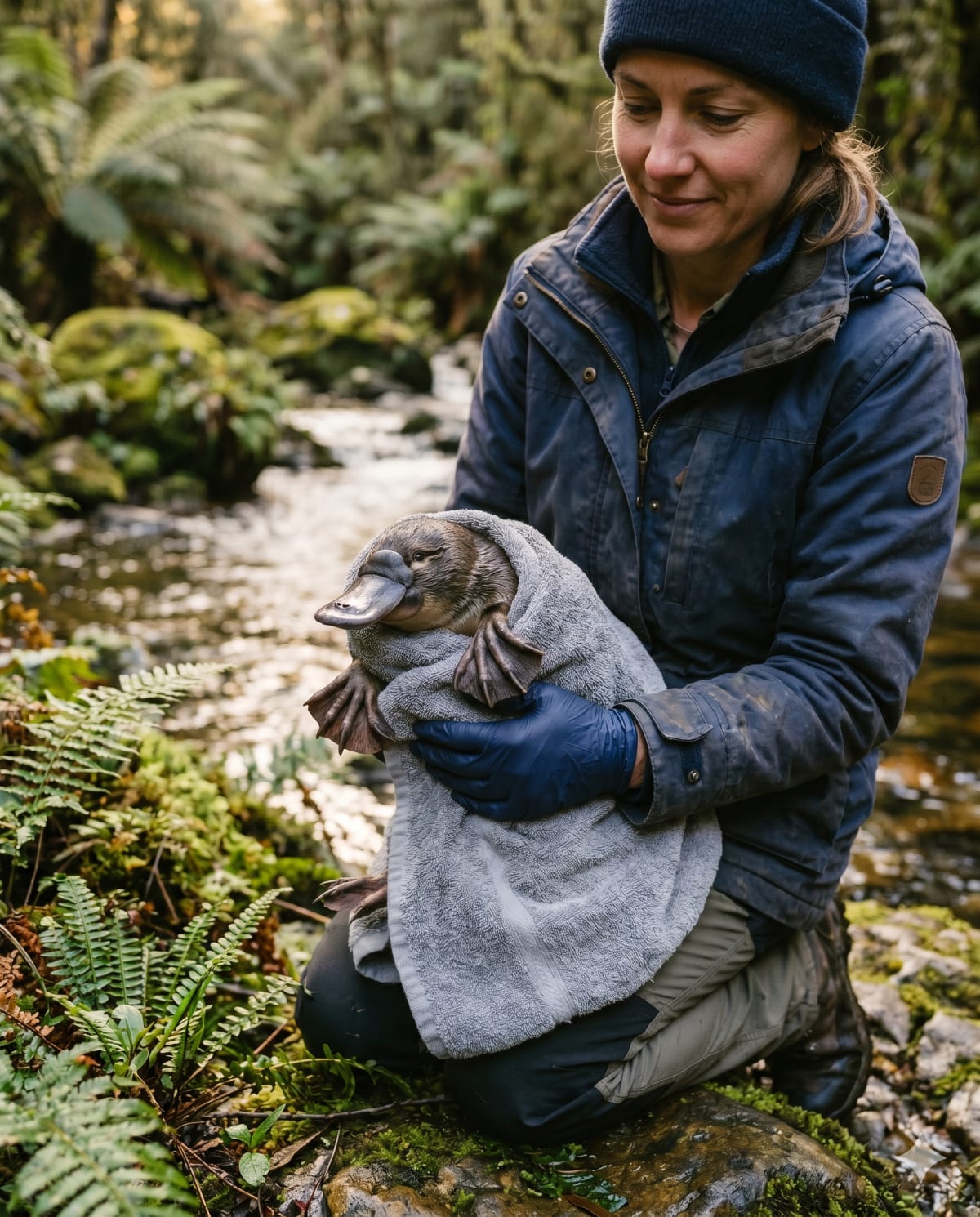
A PIT tag — short for passive integrated transponder — is a small, biocompatible glass-encapsulated RFID microchip that's implanted under the skin or in the body cavity of an animal to give it a permanent, unique identification number. The tag is passive, meaning it has no battery: it's energised by the electromagnetic field of a reader passing close by, then transmits its unique ID back to the reader.

PIT tags have been used in wildlife and fisheries research since the mid-1980s, when they were first deployed to study salmon migration in the Pacific Northwest. They're now standard equipment for individual-animal identification across an enormous range of species — fish, frogs, reptiles, birds, marsupials, eutherian mammals, and even invertebrates such as freshwater crayfish and insects. Once implanted, a PIT tag will reliably identify that individual animal for over 15 years — making them the technology of choice for genuinely long-term monitoring, mark-recapture studies, and broodstock management.
If you've worked across disciplines, you've probably noticed that the same physical product gets called different things by different people. There's no real difference — the technology underneath is identical — but the conventions vary by field, and it's worth knowing what to expect:
Throughout this page we'll use these terms more or less interchangeably — but if you're searching for something specific (PIT tag for fish, RFID broodstock identification, microchip for wildlife research), you've come to the right place regardless of which term you typed.
Microchips Australia is the exclusive Australian distributor of Trovan, a German RFID identification brand specialising in passive transponders for wildlife, fisheries, livestock, companion animals and industrial applications. Trovan PIT tags are manufactured in Europe to ISO standards and have been deployed in research and aquaculture projects on every continent.
We've been supplying the Australian wildlife, research and aquaculture community since 1989 — that's 36 years of working with Australian universities, state and federal government bodies, fisheries departments, hatcheries, conservation organisations, zoos and field researchers. We know the species, the regulators, the field conditions, and the practical challenges of Australian projects.
Buying locally matters more than it sounds. Researchers and aquaculture managers ordering from overseas suppliers face long lead times (often 4–8 weeks), import duties, GST handling, currency exchange volatility, and the practical challenge of dealing with a supplier in a different time zone when something needs urgent replacement before fieldwork or a spawning window. We hold stock in Melbourne and ship Australia-wide within a couple of business days. Our team — including Doug Black and Varun Uthappa — has personally installed Trovan monitoring systems in some of Australia's most ecologically significant projects (more on those below).
Different species, different sizes. We supply the full Trovan range so the tag is matched to the animal — not the other way around.
The smallest implantable PIT tag we supply. Ideal for very small fish, fingerlings, frogs, hatchlings, juvenile reptiles and small bird species where the conventional size would be too large. View product →
The most popular size for Australian research and aquaculture. Suits small mammals, reptiles, juvenile aquaculture stock, abalone, prawns, redclaw and yabbies. FDX-A version · FDX-B version
The standard size, used in larger wildlife, broodstock fish (salmon, barramundi, trout) and larger companion animals. Best read range and most widely-supported by handheld readers. FDX-A version · FDX-B version
Loose chips supplied in bags for large-scale studies and aquaculture operations doing in-house implantation. View bulk →
Tags are supplied either pre-loaded in single-use sterile needles (the most common format for researchers and hatcheries in the field), or as loose, non-sterile chips for bulk and OEM use. We also stock the matching re-usable IM200 syringe implanter and pistol implanter for the smaller tag sizes.
Trovan PIT tags come in two protocols, and the right choice for your project depends on what you're tagging and what equipment you (or downstream researchers) might use to read the tags.
The original Trovan protocol. FDX-A tags transmit a 10-character alphanumeric ID and are the best choice for wildlife, research, zoo and aquaculture applications — particularly where extended programs may already be using Trovan FDX-A and you want to maintain compatibility with historical data. FDX-A is the protocol used in the platypus, Tasmanian devil, Leadbeater's possum and giant freshwater crayfish projects we discuss below.
The international ISO standard. FDX-B tags are required by Australian legislation for companion animal microchipping (dogs, cats, horses). Researchers may choose FDX-B when their study population is likely to be scanned by general-purpose ISO readers (e.g. veterinary clinics, councils) rather than research-specific equipment.
Important: Trovan FDX-A tags supplied in our Wildlife / Research / Aquaculture range are not registered with Central Animal Records and are not suitable for companion dogs, cats or horses in Australia — Australian legislation requires FDX-B / ISO chips with prepaid registration for companion animals.
Not sure which protocol fits your study or operation? Talk to our team — we'll walk through your project, target species and downstream-reading scenario before quoting.
The Trovan PIT tags we supply are used across virtually every taxonomic group studied in Australia. Some of the most common applications:
Trovan PIT tags are used throughout the Australian aquaculture industry for individual identification, broodstock management, growth and feed-trial tracking, and traceability. Common applications include:

A small selection of Australian conservation, research and aquaculture projects where Microchips Australia has supplied Trovan PIT tags, readers, antennas or full remote monitoring systems. These represent decades of work across an enormous range of species and field conditions.
Mount Roland Land Care, working with crayfish expert Todd Walsh and funded by Landcare Australia, used PIT-tagged Giant Freshwater Crayfish (Astacopsis gouldi) and Trovan microchip scanners to investigate whether the species — the largest freshwater invertebrate in the world, listed on the IUCN Red List — would use under-road culverts. Until this 2025 project, the widely-held view in Tasmania was that GFC simply wouldn't enter culverts, leading to road mortality as they crossed roads instead.
Using Trovan microchip scanning and remote camera technology, MRLC volunteers documented — for the first time — that GFC will use round plastic culverts when travelling downstream, and may use them upstream against modest flow when a stone substrate is present. The findings have direct implications for how culverts are designed and modified to allow safe passage for an endangered species.
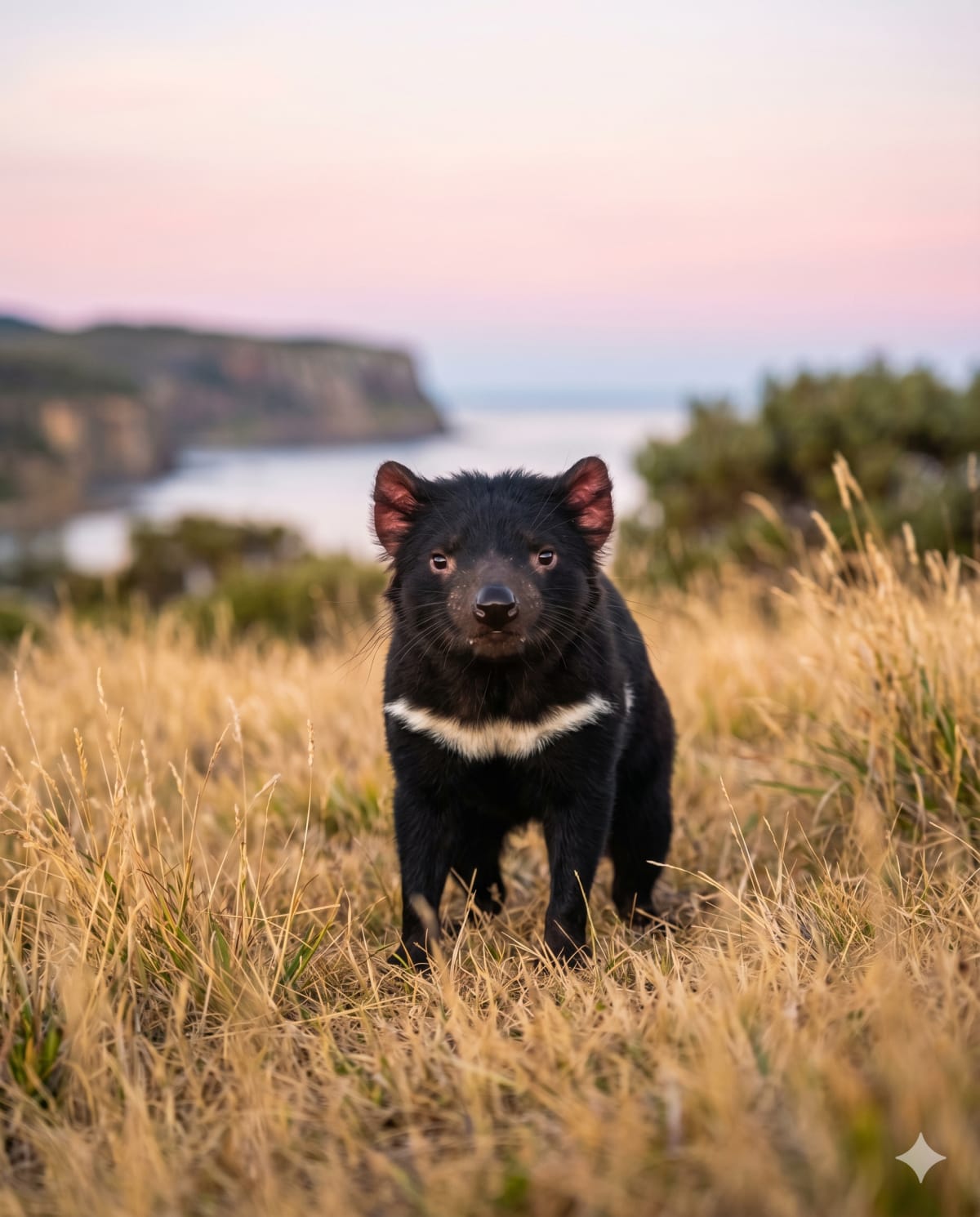
As part of the Save the Tasmanian Devil program's response to Devil Facial Tumour Disease (DFTD), tumour-free devils were introduced to Maria Island off Tasmania's south-east coast as an insurance population. Numbers more than doubled to 90+ animals across a 115km² island — leaving researchers with the practical challenge of monitoring a wide-ranging population in remote terrain.
Microchips Australia, working with Dorset ID, supplied and installed the remote monitoring solution: multiple LID650 decoder/data-loggers paired with ANTSQR400 (400mm square) antennas, some fitted with GPRS modems for live data transfer back to researchers in Hobart, plus a LID608 unit with weigh-scale integration. Our staff Varun Uthappa and Doug Black personally installed the units alongside Save the Tasmanian Devil program member Bill Brown, over three cold days and nights in some of the island's most remote areas. Solar panels keep the systems running indefinitely.
Leadbeater's Possum is Victoria's State Fauna emblem and one of Australia's most endangered mammals — endemic to a small region of the Central Highlands between Lake Mountain and Mt Baw Baw. After the 2009 Black Saturday bushfires destroyed 40–50% of their prime habitat, population estimates fell from 2,000–2,500 to under 1,000.
The state recovery program uses Trovan LID650 decoders with custom-built antennas to monitor possum activity at nesting boxes (50mm-diameter antenna openings) and feeding stations (250 × 200mm antennas), paired with optical sensors to give directional in/out data. The combined RFID and night-vision camera approach has already led to the discovery of two previously-unknown un-microchipped individuals — meaningful in a population this small.
Dr James Macgregor of Perth's Murdoch University and his team implanted Trovan ID-100A microchips between the shoulder blades of 154 platypuses in the Inglis River catchment, north-western Tasmania. The breakthrough wasn't the tagging — it was the monitoring method. Two types of fully submersible Trovan receiver were positioned in creek beds: a camouflaged square panel sunk into the substrate, and a 600mm-wide ANTC600 tunnel antenna the platypuses swim through.
"Everyone puts microchips in to identify animals, but the new part of this project was putting the monitors in the creek so we can track them in a hands-off way," James says. "Previously we had to recapture the animals, which is very labour intensive and stressful for them." The system has identified individual platypuses microchipped years earlier, demonstrating the durability of PIT tags for genuinely long-term monitoring — and is now being used to track the spread of the fungal disease mucormycosis through Tasmanian platypus populations.
Microchips Australia has supplied Trovan PIT tags and RFID equipment for pearl-farming research projects based in Broome, Western Australia — supporting individual oyster identification, growth tracking and breeding research in one of Australia's iconic aquaculture industries.
Following the development of a national information standard on free-range egg labelling by Australian Consumer Affairs Ministers, researchers Campbell et al. used Trovan ID-100A bulk transponders fitted into leg bands to measure individual range usage by ISA Brown hens at three stocking densities (2,000, 10,000 and 20,000 hens/ha). Custom RFID systems built by Dorset ID and supplied by Microchips Australia were installed in pop-hole passageways with paired optical beam sensors at either side of the antenna plate, recording every individual's range visits with 0.024-second precision.
The published findings (Campbell et al., The Animal Consortium, 2016) demonstrated meaningful differences in range use across stocking densities, with implications for how outdoor stocking density is set in commercial free-range systems.
These are a handful of the projects we've supported — Microchips Australia has supplied Trovan equipment for hundreds of Australian wildlife, fisheries, aquaculture, agriculture and research programs since 1989. If you're working on a project that's not represented here, we'd genuinely love to hear about it.
A PIT tag is only as useful as the equipment used to read it. We supply the full Trovan reader range, from pocket handhelds for vet-style scanning to ATEX-certified industrial readers, plus custom remote monitoring antenna/decoder systems built to your project's specifications.

For mark-recapture work and field scanning we recommend the LID-575 (reads FDX-A, FDX-B and HDX/NLIS, stores 5,370 reads, USB to PC) or the newer premium LID-574 (IP66 waterproof, e-ink display, USB-C). For FDX-A-only research and aquaculture environments — including marine and anti-theft applications — the GR-252 high-performance reader offers exceptional read range. For mixed-system environments involving NLIS HDX livestock ear tags, the ARE-H5 reads the full range of protocols.
Many research and aquaculture projects need more than an off-the-shelf reader. We work with researchers and hatchery managers to design and supply custom single-coil antennas — circular or square, in any dimension up to 500mm — built to your specification. Custom antennas have a typical lead time of 4–6 weeks and let you build remote monitoring stations, swim-through detection systems, or pop-hole sensors precisely tailored to your study site, target species and operational constraints.
For long-term, hands-off monitoring — fish swim-throughs in creek beds, possum nesting box entries, feeding station visits, road-underpass and culvert use, hatchery raceway detection — we supply complete systems combining LID650 or LID608 decoders, custom antennas, GPRS modems for remote data transfer, solar panels, weigh-scale integration and optical sensor combinations for in/out directional data. The Tasmanian Devil and Leadbeater's Possum case studies above are examples of these systems in action.
Most researchers and aquaculture managers buying PIT tags benefit from a quick conversation before ordering — to confirm the right size and protocol for their target species, discuss reader and antenna compatibility with existing equipment, work out volume requirements, and check delivery timing against fieldwork or spawning windows. We assign every research and aquaculture customer a dedicated account manager who handles that conversation directly.
The simplest first step is to request a callback — either using the floating callback button at the bottom-right of your screen, or via the form on our contact page. Tell us roughly what you're working on — species, study or operation size, timing — and we'll come back with the right products and a quote, usually within one business day.
For smaller standard orders (sterile 10-packs of any of our research microchips, or accessories like implanters and replacement needles) you can also order direct from the relevant product page — those orders ship from Melbourne within 1–2 business days for delivery anywhere in Australia.
Trovan FDX-B tags (the ID162 range) comply with ISO 11784 and ISO 11785, and are read by any ISO-compliant reader. Trovan FDX-A tags (the ID100 range) use the Trovan Unique 128 kHz protocol — they're not ISO-format, which is intentional for research and aquaculture applications where you want a non-overlapping ID space and freedom from companion-animal regulatory frameworks.
Trovan PIT tags are encapsulated in biocompatible glass and are designed to last the lifetime of the animal — typically well over 15 years. Tags implanted in long-term study animals or broodstock can still be read decades later, which is one of the main reasons PIT tags are preferred over external tags for genuinely long-term monitoring and breeding programs.
That depends on the jurisdiction and other factors — research involving the capture, tagging or implantation of wildlife in Australia requires permits from the relevant state authority and, in most cases, an animal ethics committee approval from your institution. Permit requirements vary by state, species and conservation status. For aquaculture stock on commercial premises, the situation and permits may not be required. We don't issue permits, but we're happy to point you toward other Australian researchers and institutions who can speak to the process in your jurisdiction.
The Trovan Nano (1.25mm × 8mm) is the smallest tag we supply and has been used successfully in very small fish, fingerlings, frogs, juvenile reptiles and small bird species. Published research on Nile tilapia indicates PIT tags can be used in fish of around 10g body mass; final suitability depends on species, the implantation site. We recommend trialling with a small batch before committing to a full study or hatchery population.
Trovan FDX-B tags can be read by any ISO 11784/11785-compliant reader. Trovan FDX-A tags use the Trovan Unique protocol and require a Trovan-compatible reader (most modern Trovan readers read both FDX-A and FDX-B). This is worth thinking about up front if your study animals or fish may be encountered later by other researchers or facilities using different equipment.
Microchips Australia primarily serves Australian and New Zealand customers. For international orders, we can refer you to your local Trovan distributor.
Tell us about your species, study or operation size, and timeline. Your account manager will come back with the right tags, readers and antennas — and a quote — usually within one business day.
Request a Callback →